
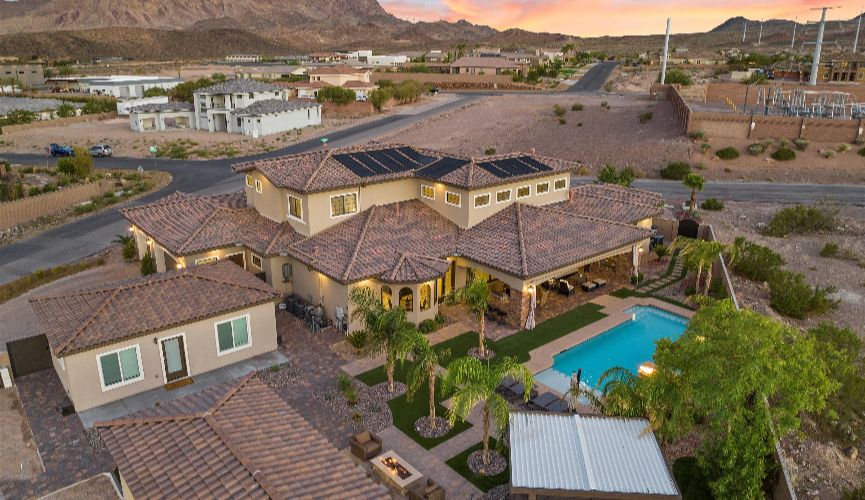
Building an energy-efficient home in the desert presents unique challenges, but with the right planning and design, homeowners can create a comfortable, eco-friendly living experience. Energy efficiency is a necessity, particularly in the scorching desert climates of Las Vegas, NV. By emphasizing desert architecture principles and integrating innovative technologies, you can significantly reduce energy consumption while maximizing energy savings.
- Choose The Best Insulation For Desert Homes
- Optimize Desert Climate Home Design with Passive Solar Home Features
- Embrace Renewable Energy With Solar Panels
- Use Energy Star-Rated Appliances & Windows
- Implement Strategic Landscaping Techniques
1. Choose The Best Insulation For Desert Homes
Proper insulation is crucial for energy-efficient homes in desert regions, where temperature fluctuations are extreme. Selecting insulation materials that resist heat transfer helps maintain a consistent indoor temperature, reducing the need for excessive air conditioning.
Consider closed-cell spray foam or rigid foam insulations, which offer superior thermal resistance and can significantly lower energy costs in hot climates. Investing in high-quality insulation at the outset sets the foundation for long-term energy savings.
2. Optimize Desert Climate Home Design With Passive Solar Home Features
A passive solar home thrives in desert environments by using the sun’s energy to heat and light spaces naturally. Design strategies include orienting the building to maximize south-facing glass, using thermal mass materials, and providing adequate shading.
Large windows can flood the space with natural light while minimizing the solar heat gain during peak sun hours. By incorporating these features, you can exploit renewable energy efficiently, minimizing the need for artificial heating and cooling.
3. Embrace Renewable Energy With Solar Panels
Solar panels are a quintessential feature for any energy-efficient house in the desert. Capitalizing on our abundant sunlight reduces reliance on non-renewable energy sources and slashes utility bills.
These panels convert sunlight directly into electricity, offering a sustainable energy solution that aligns with eco-friendly home goals. Incorporating solar panels is not just a nod to environmental responsibility, it’s a practical step toward autonomous energy generation.
4. Use Energy Star-Rated Appliances & Windows
Selecting energy star-rated appliances ensures the operation of household essentials with minimal energy wastage. From refrigerators to air conditioning units, these products undergo rigorous testing to guarantee efficiency in hot climates.
Additionally, energy-efficient windows with double or triple glazing help maintain a stable indoor environment by minimizing heat exchange, further supporting efforts in reducing energy consumption and maximizing home comfort.
5. Implement Strategic Landscaping Techniques
Desert landscaping is more than just aesthetic; it plays a pivotal role in creating energy-efficient homes. By incorporating native plants and desert-friendly foliage, you can naturally cool the surrounding environment.
Intelligent placement of trees and shrubs can serve as wind barriers, reducing heat and providing shade, which impacts overall energy usage. These landscaping techniques contribute to a sustainable home environment, enhancing comfort without energy-intensive interventions.
FAQ
What are some key considerations for building an energy-efficient home in the desert?
Key considerations include selecting energy-efficient materials, incorporating passive solar design, utilizing high-performance windows, implementing proper insulation, and using energy-efficient appliances. It's vital to design with the climate in mind to minimize energy consumption while maintaining comfort.
How can passive solar design benefit desert homes?
Passive solar design takes advantage of natural sunlight and shading to heat and cool the home, reducing the need for artificial heating and cooling systems. This approach optimizes the orientation of the home, window placement, and use of materials that absorb and release thermal energy wisely.
Why is insulation important in desert climates?
In desert climates, insulation helps maintain a stable indoor temperature by reducing the transfer of heat between the home’s interior and exterior. This minimizes the need for heating and cooling systems to work overtime, enhancing energy efficiency and reducing utility costs.
Are there specific roofing materials recommended for desert energy efficiency?
Cool roofing materials are ideal for desert climates as they reflect more sunlight and absorb less heat compared to traditional roofing. These materials can significantly reduce cooling costs and improve indoor comfort, contributing to overall energy efficiency.
Achieve Your Dream Desert Home With Confidence
Creating an energy-efficient home in the desert of Las Vegas combines innovative design, sustainable technology, and strategic planning. If you’re aspiring to build an eco-friendly home, choosing a trusted partner can make all the difference.
Dream Construction is dedicated to delivering luxurious, energy-efficient homes tailored to meet every individual need. Make your dream a reality by contacting us today for unparalleled craftsmanship and unmatched expertise.